The trigger
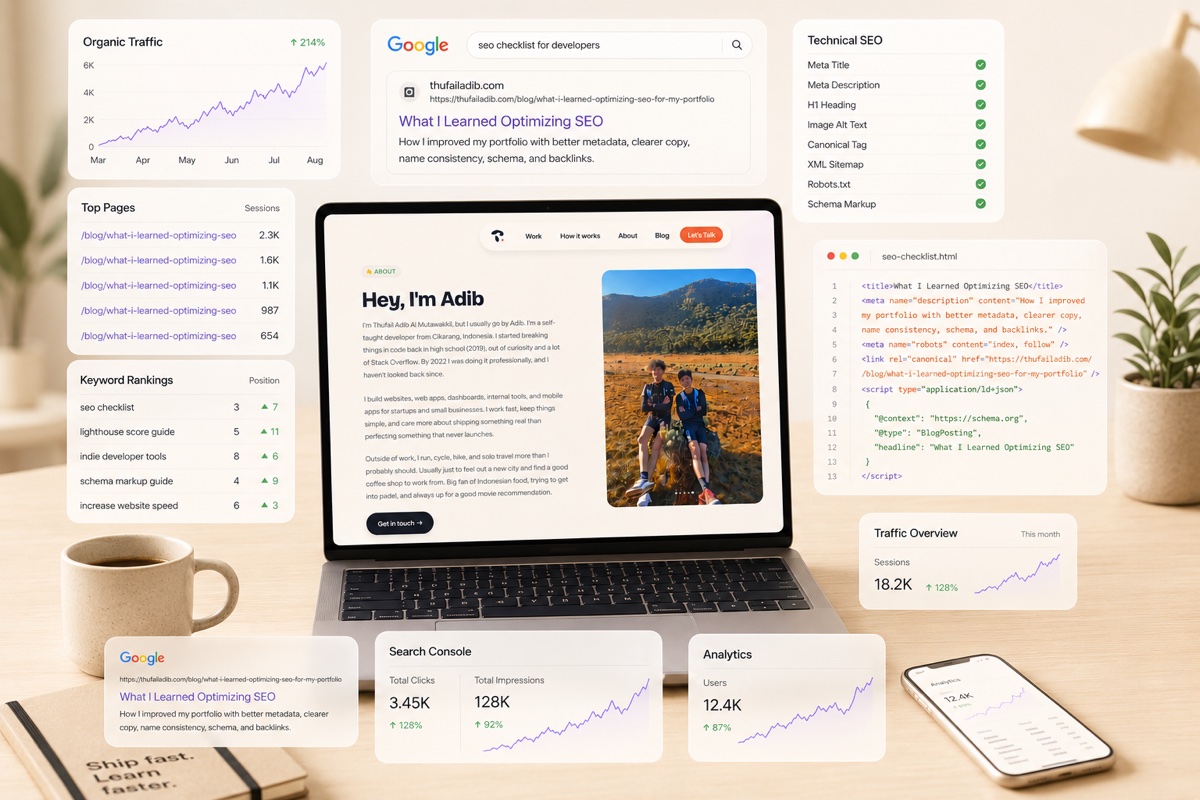
Recently I spent some time looking at why my portfolio only showed up on Google when someone searched for “Thufail Adib”, but not when they searched for my full name, “Thufail Adib Al Mutawakkil”. That was the trigger. I wanted my site to be easier to find, but I also wanted to stay honest about what I do and how I describe it.
The first thing I realized was that SEO is less about hiding keywords in the background and more about making the page easy to understand. I used to think maybe I needed more technical tricks. In practice, the clearer move was to improve the actual content people see.
One of the biggest lessons was that meta keywords are basically outdated. They are not the thing that makes a portfolio rank better today. What matters more is the page title, the meta description, the visible headings, and the copy on the page itself. Those are the signals that tell both people and search engines what the site is about.
So I started with the homepage title and description. Instead of keeping the generic version, I changed it to be more specific about who I am and what I build. That meant using my full name and describing my work in plain language. The same idea applied to the hero section and the About page. I made the copy more direct so there was no guesswork about whether I build websites, web apps, dashboards, internal tools, or mobile apps.
That part mattered for another reason too: I realized I was using words like “SaaS” without feeling fully confident about claiming that yet. So I removed it and switched to more concrete terms like web apps, dashboards, and internal tools. That felt more accurate, and it still gave Google useful context. I think that matters. If a phrase sounds impressive but does not really match your work, it is probably not helping you in the long run.
Making the site clearer
Another thing I learned is that name consistency matters more than I expected. My site, GitHub, LinkedIn, and Cal.com all had slightly different versions of my name or brand. I keep adib. as the visual brand, but I also made sure the full name appears clearly in the right places. That way the short brand and the full searchable name can work together instead of competing with each other.
I also added structured data to help search engines connect those name variants. That is one of those things that is invisible to most visitors, but it helps give search engines a cleaner picture of who the site belongs to. In my case, that meant linking together Adib, Thufail Adib, Adib Al Mutawakkil, and Thufail Adib Al Mutawakkil through schema instead of hoping Google would infer it on its own.
Once those internal signals were clearer, I looked at the external ones. Backlinks mattered too, but not in a dramatic, magical way. I updated my GitHub, LinkedIn, and Cal.com profiles so they all point back to my website and carry the same identity signals. That does not instantly fix rankings, but it makes the whole picture more consistent. For a personal site, consistency is a big part of credibility.
What I’d keep in mind
If I were reducing all of this to a simple checklist, it would be this:
- use a clear page title with your name and role
- write a meta description that explains what you do
- make the visible copy say the same thing
- keep your name consistent across your website and public profiles
- use structured data to connect name variants
- add backlinks from profiles that already represent you
I would also keep the tone honest. I did not want the website to feel like an agency page, so I did not add a big services section. Instead, I let the homepage, About page, and project descriptions do the work. That kept the site personal while still making it easier for Google to understand.
The takeaway
The interesting part is that none of these changes were complicated. They were mostly about clarity. Once the site said more precisely who I am and what I build, the SEO story became much cleaner too.
That is probably the biggest takeaway for me: good SEO for a portfolio is not about trying to sound bigger than you are. It is about being specific enough that the right people can find you.
If you want to leave a comment on Medium, you can find the post here.